FIONA GOULDING Nature & Wildlife Artist Celebrating the Beauty of Nature
  • Welcome
  • About Fiona Goulding
  • New Zealand Birds & Animals
  • New Zealand Landscapes
  • Wildlife Art & Conservation
    • Kea
    • Fairy Tern
    • Honey Bee
    • New Zealand Falcon
    • North Island Brown Kiwi
    • Campbell Island Teal
    • Rock Wren
    • Takahe
    • Rifleman
    • Sumatran Tiger
  • Books
  • Contact & Links

Books

IN BOOKSTORES MARCH 2026!
Picture

 Because We Love:
Our Planet, Our Wildlife, Our Future

Through rhyming text and imaginative illustrations, this book beautifully reveals how climate change is affecting Earth's precious animals.  See the challenge and be inspired to help protect our wildlife - Because we love.   

Published by Redback Publishing, it is available for purchase at any good bookstore from March 2026 or you can contact Nationwide Distributors.

Picture
Picture
Picture

Featured Paintings for Sale...

Picture
A major habitat of the Bengal Tiger is the Sundarbans mangrove forest.  Mangroves survive in saltwater by filtering salt, storing freshwater and growing vertical roots with special pores to allow them to breathe.  Sea level rise is occurring faster than mangroves can grow these vertical roots leading to 'drowning' and a loss of oxygen to their roots and ultimately a loss of habitat for the tigers.  
Picture
Elephants need  up to 50 gallons of water daily!  Not only to drink, they also need water to cool down as they are unable to sweat.  They also love to play and use water to spray.  As temperatures rise and droughts increase, water holes dry up, reducing their sources of water.  This painting is inspired by the visual similarity between the elephant's dry cracked skin and the dry cracked earth of drought.
Picture
The Fairy Tern's nest is a small scrape in the sand making it extremely vulnerable to predators and rising high tides and storms.  It chooses to nest on shell covered beaches to provide camouflage, be near food sites and be in a position where adults can spot predators from all sides.  In this painting, fairy terns emerge from the foam of the sea to rescue their eggs.
Picture
Humpback Whales, like many other marine animals, rely greatly on krill for food.  Rising temperatures are causing krill to move to cooler waters, resulting in a decline of food sources for marine life.  When under threat from predators, krill swarm into a pinkish-red haze, not unlike flickering flames, indicative of a warming ocean.
Picture
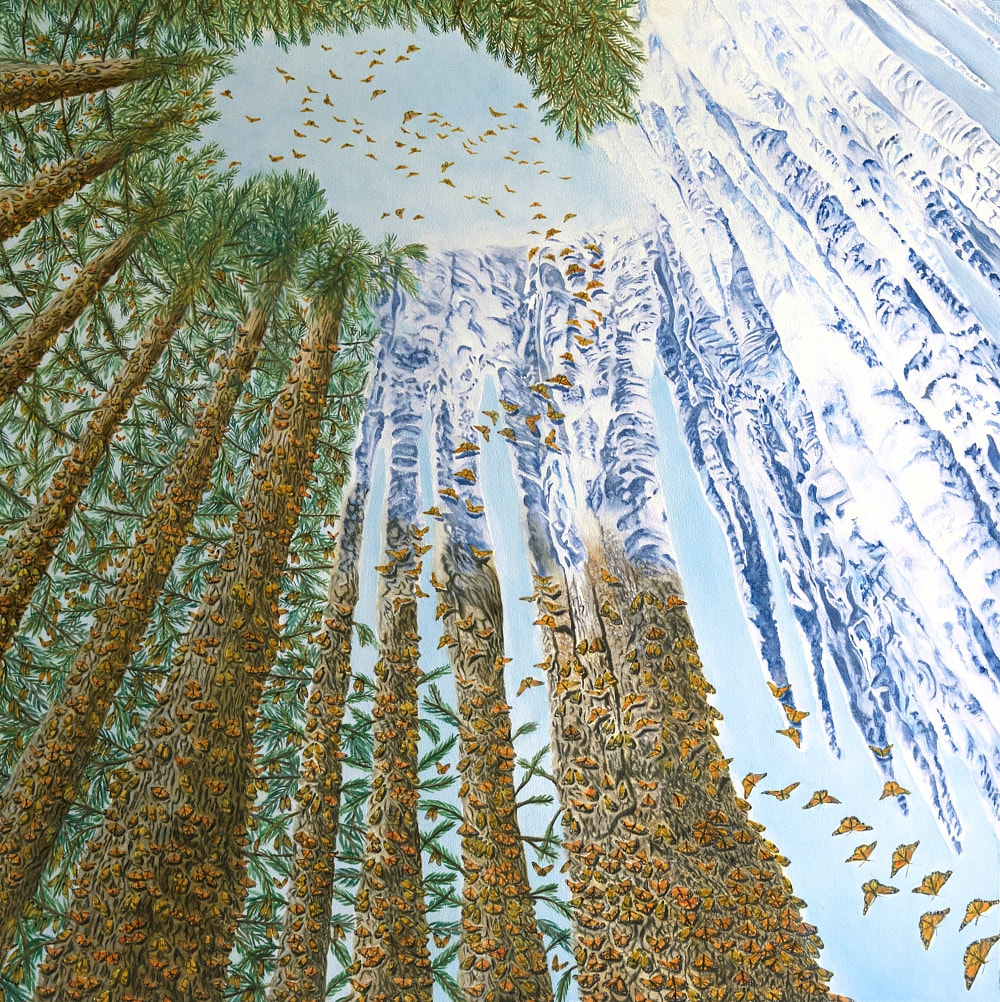
Monarch Butterflies migrate in colder weather to head to warmer climates.  They depend on environmental cues, particularly temperature, to trigger when they migrate.  Global warming disrupts this migration, shown above by the alternating direction of the butterflies as trees metamorphose into icicles.  Climate change also affects these butterflies through increased drought, extremes of heat and cold, and severe storms and high winds.  
Picture
Puffins rely on fish for food.  They are able to dive deep into the sea and 'fly' through the water to catch their prey.  Rising temperatures are warming the ocean causing fish to move to cooler waters.  Puffins prefer to stay in the same areas as they like to nest in the same place each year, so they don't follow the fish.  In this painting, is the puffin in the sky or are the others underwater?

Picture
The Tuatara lays its eggs in the sand.  The sex of its hatchlings is affected by the temperature of the soil, with warmer soil creating males and cooler soil resulting in females.  Global warming is causing more males to be born, threatening this species.  Males have prominent spines along their back and tail.  Here these become trees and hills of their natural coastal forest habitat.

Picture
The Front Cover of this book features seven animals featured in the book: the Polar Bear, Puffin, Sea Turtle, Humpback Whale, Snow Leopard, Snowshoe Hare and Elephant.  The ocean forms the unifying element for all these animals.
Picture
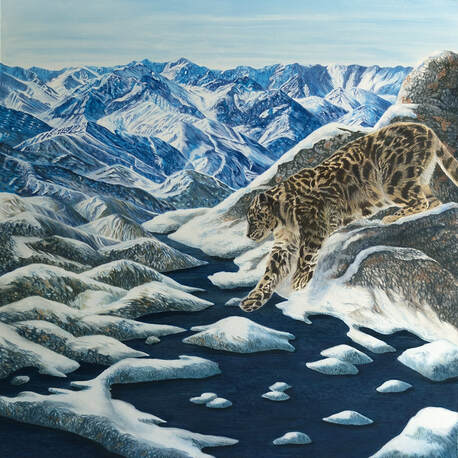
The Snow Leopard lives in high, rugged mountain ranges of Central and South Asia, including the Himalayas.  Climate change is severely affecting them as increased temperatures melt glaciers.  This shrinks their alpine habitat, shifting the tree lines upward and reducing their available prey.  In this painting, alpine mountains shrink to rocks then mounds of snow which melt to puddles of water.
Picture
The Kiwi uses its beak to forage for insects underground.  As temperatures increase, the ground hardens and the Kiwi's beak cannot penetrate the earth to reach food.  This especially affects chicks whose beaks haven't yet hardened and are left alone at 1-2 weeks old to forage for food.  This painting is a visual metamorphose of the dandelion to the kiwi.  (This painting is sold).
Picture
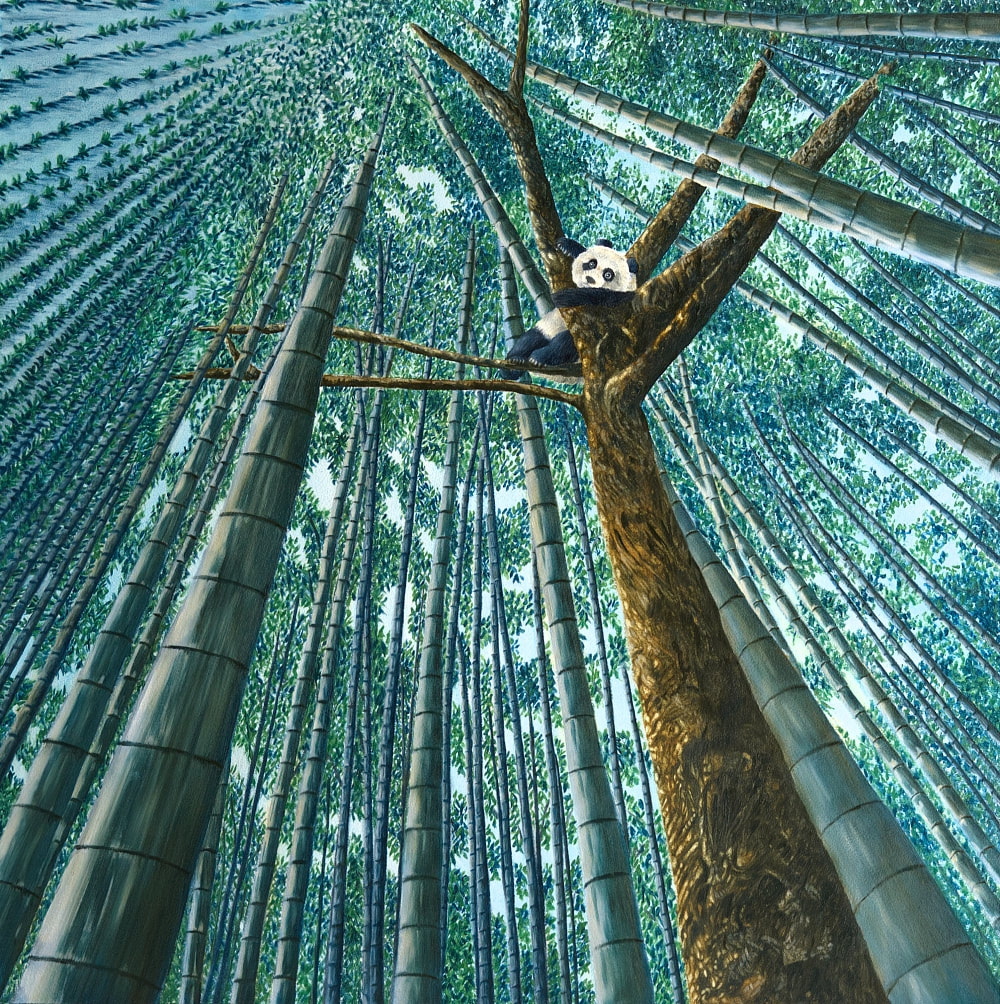
The Giant Panda consumes massive amounts of bamboo which constitutes 99% of their diet.  Climate change is causing bamboo to die off or fail to grow through flooding and warmer temperatures.  This reduces panda habitats and severely affects their major food source.  In this painting, the sky and bamboo transform into flood water.
Picture
Koalas rely on eucalyptus leaves for food and water.  Rising levels of carbon dioxide in the atmosphere, which enters the pores of these leaves, increases toxins in the leaves and lowers nutrition.  Droughts and heat waves also dry out the leaves which reduces their water content.
Picture
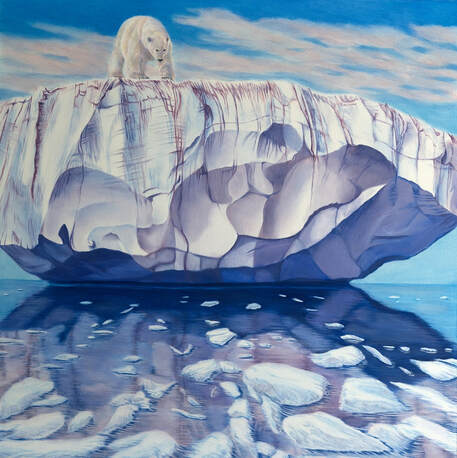
Polar Bears rely on sea ice to travel, breed and hunt for prey.  Rising temperatures are causing this ice to melt, reducing their habitats.  Sea ice also supports a rich food chain nourishing their prey so as this disappears, the polar bears not only lose their hunting platforms but also their food sources.  The shapes of polar bears can be found in the large iceberg indicative of the threat of extinction they face.
Picture
Sea Turtles begin life as tiny hatchlings which race towards the sea.  Adult female sea turtles travel long distances to lay their eggs in the same nesting site where they were born.  They bury their eggs in the sand but extreme storms and high tides are destroying these nests.  In this painting, is the sea turtle swimming in the sea or the sky? Is the nest underwater or on the beach?
Picture
Snowshoe hares moult changing the colour of their coat to white in winter to blend with snow and brown in summer to blend with the earth.  This moulting is governed by day length rather than temperature.  Rising temperatures are causing snow to melt early, leaving the white hares exposed to predators.  There are six snowshoe hares in the above painting - can you spot them all? (This painting was auctioned to raise funds for World Wildlife Fund - NZ).
Picture
The Back Cover of this book features seven animals featured in the book: the Koala, Giant Panda, Fairy Tern, Bengal Tiger, Tuatara, Monarch Butterfly and Kiwi. A canopy of trees forms the unifying element for all these animals. (This painting is sold).

How are paintings created?

See how a painting unfolds below:

The Search for Silva

Picture
Picture
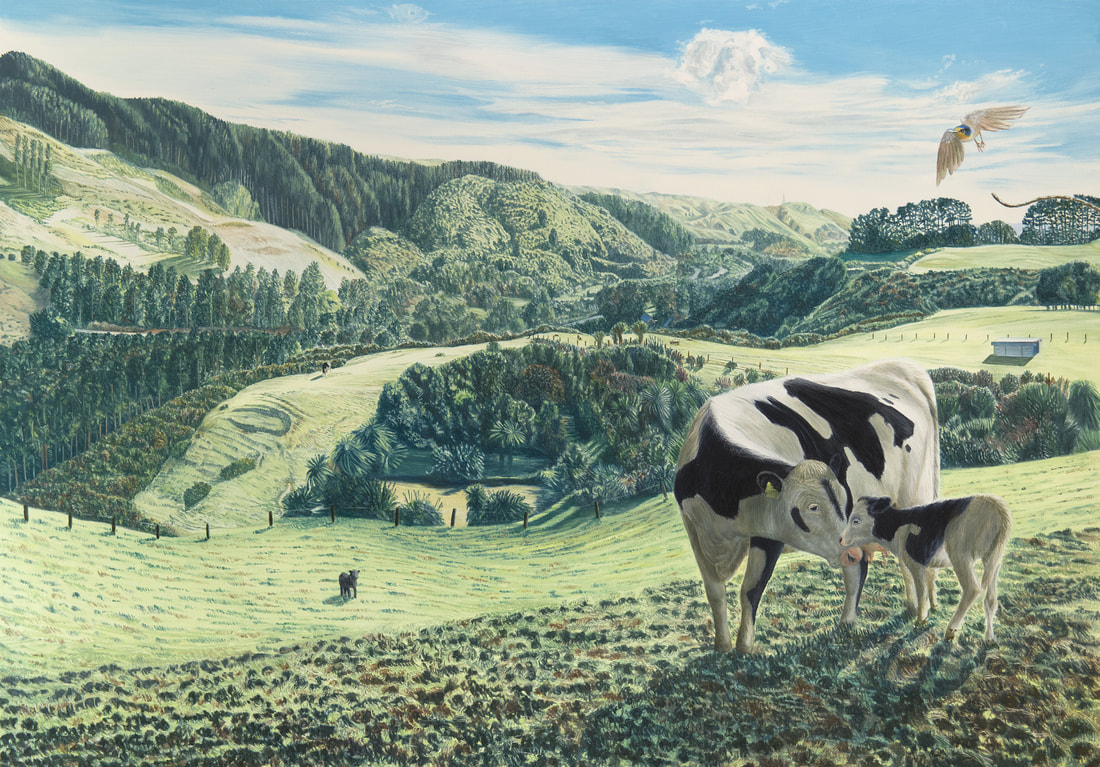
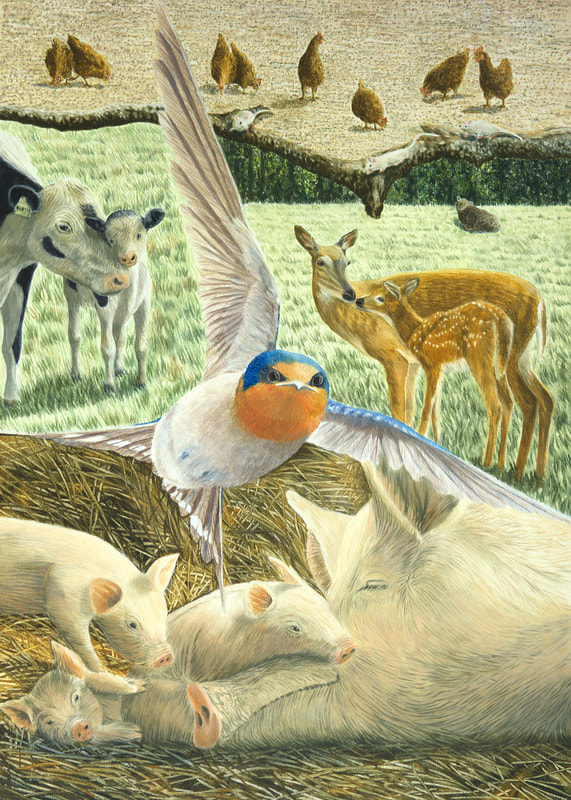
Fiona has written and beautifully illustrated a children's sophisticated picture book.  Called The Search for Silva, it is written from the point of view of animals, in the genre of an armchair treasure hunt.  It is aimed at promoting compassion and empathy towards animals.

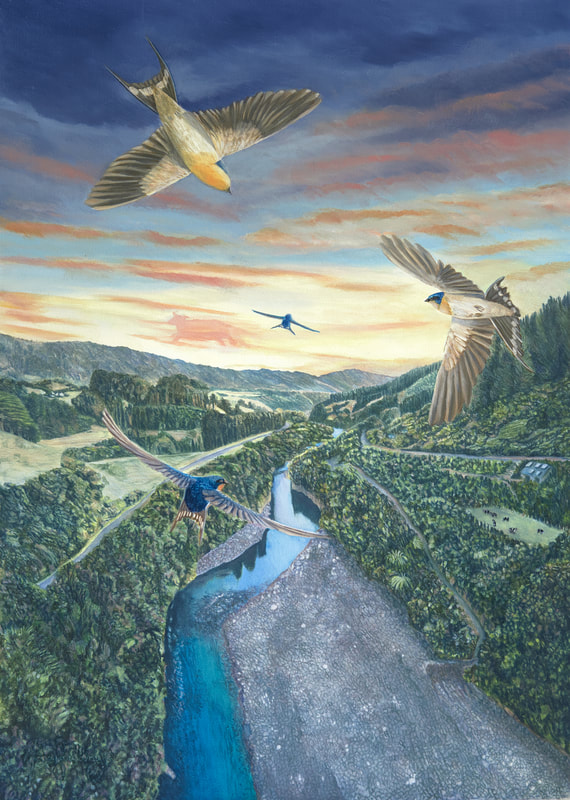
It follows a welcome swallow, Sam, who, on the way to the dawn chorus, meets a cow called Cindy.  Cindy is upset as she has lost her calf, Silva.  Sam teams up with Cindy to find Silva and they meet other animals on their journey and learn of their experiences.  There are clues, both in the text and illustrations, as to the whereabouts of Silva, as he is somewhere in New Zealand.  Be the first to work out Silva's location and a prize awaits you!

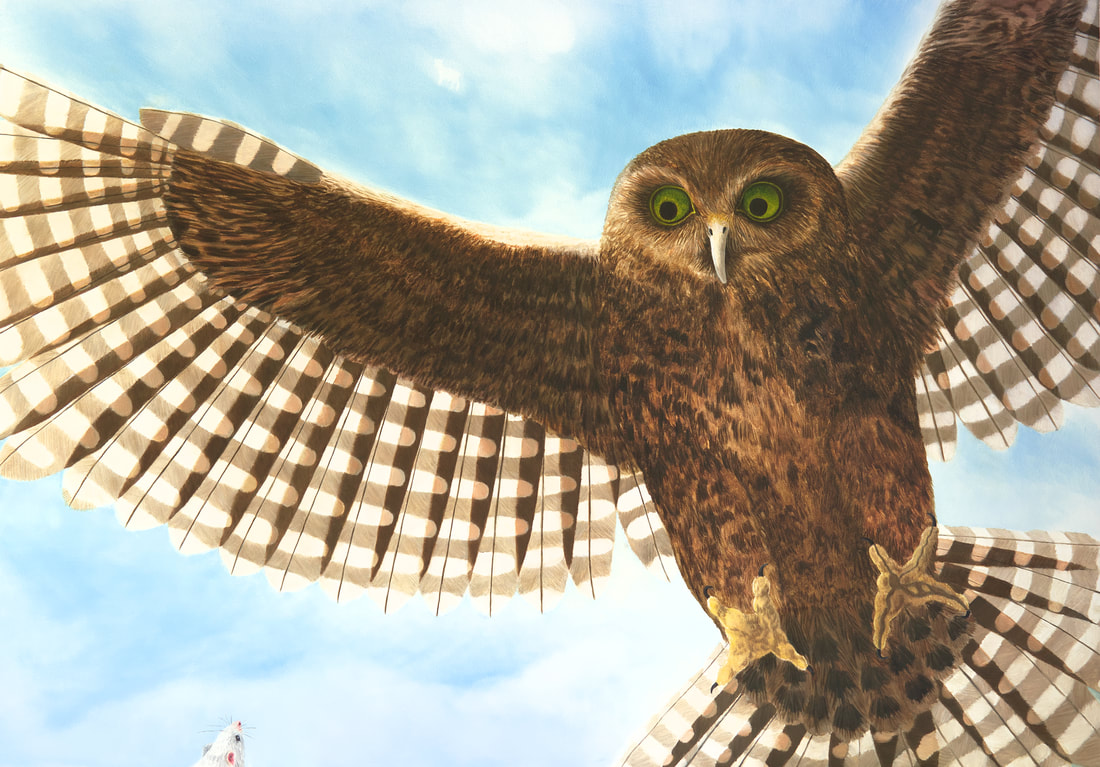
The Search for Silva is a 32-page book with 15 illustrations.  It is aimed at 8-10 year olds but doesn't exclude readers either side of this age bracket.  It is an educational, yet fun and engaging, look at animal's lives and the influence people can have on them.  Copies cost NZ$24.99 each.  Shown opposite and below are some of the illustrations from the book.

Picture
Picture
REQUEST A COPY OF 'THE SEARCH FOR SILVA'
READ REVIEW OF 'THE SEARCH FOR SILVA'
Picture
The original paintings of this book will be auctioned in 2025 with all proceeds going to NZAVS - New Zealand Anti-Vivisection Society.


CONTACT FIONA
Proudly powered by Weebly